

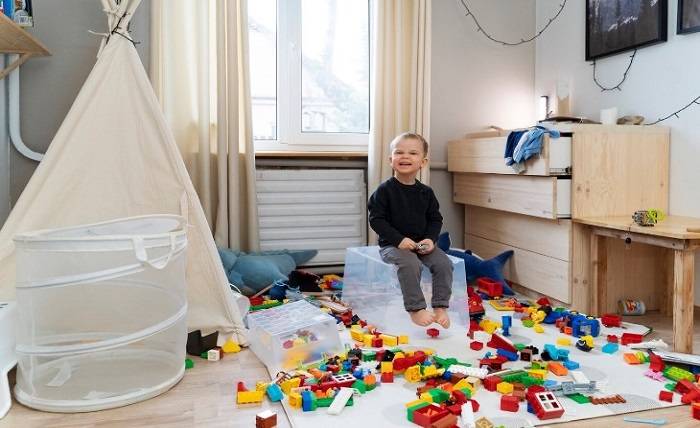
A Montessori floor bed or a low-height bed is designed to provide maximum comfort for toddlers, ensuring they feel secure while also experiencing a sense of freedom. This type of bed allows children to get in and out of bed without needing their parents’ help. In the morning, the child can wake up, play with their toys, and explore their space without immediately demanding to be taken out of bed. Starting the day with a positive atmosphere instead of tears and negativity is a primary reason parents prefer Montessori beds. But is it really that good, and what are the drawbacks of such a bed? Let’s delve into all the nuances and aspects to reach an informed conclusion.
Pros Of a Montessori Floor Bed
The main advantage of a toddler floor bed is that it gives the child independence. In a regular crib, the height is too much for the child to get out of without help, making them completely dependent on their parents. With a toddler floor bed, the child can easily get in and out of bed by themselves.
Enhances Motor Skills
Along with independence, children gain more control over their motor skills and even their environment. For example, they can get out, find a toy or a book, and go back to bed when they are tired.
Increases Mobility
When you do everything for the child—taking them out of bed and putting them back in—you do not encourage the development of gross motor skills. When the child can move safely and independently, their confidence grows, and they develop coordination, muscle strength, and motor skills. It’s important not to do for the child what they can (and should) do themselves for their active development.
Ideal for Small Rooms
Montessori floor beds can be large, even double-sized (suitable for teenagers and adults), or quite compact. They are perfect for small rooms, avoiding clutter with bulky furniture.
Reduces Injury Risks
Most children are afraid to climb out of a traditional high bed and wait for their parents’ help. However, some brave ones try to overcome any height, leading to falls and injuries. Meanwhile, falling out of a low floor bed is hardly possible, and even if they roll out, they won’t get hurt because the height is too low for that.
Allows for Cuddling
Children love cuddles, especially before bedtime. It gives them a sense of confidence, security, and calmness. But how can an adult get into a crib without breaking it? For this reason, babies often end up sleeping in their parents’ bed, falling asleep in their arms. In a Montessori bed, you can lie down together and cuddle the child as they fall asleep, which is a safer option than co-sleeping in the parents’ bed. If the baby wakes up in the middle of the night, scared by a dream and starts crying, it’s easy to lie down next to them and comfort them without needing to climb over the sides or pick them up (which would probably fully wake them up, requiring a repeat of the bedtime routine).
Cons Of a Montessori Floor Bed
- With the freedom of movement comes the need for a fully child-proofed room. Parents must ensure all potential hazards are removed or secured, which can be time-consuming and require constant vigilance.
- Fully floor-level beds without legs offer no storage space underneath, so organizers need to be arranged separately. However, beds with low legs can be equipped with drawers for storage.
- Greater freedom allows the child to get up, start playing, and fall asleep somewhere other than the bed, like on a play mat with toys. This happens sometimes.