

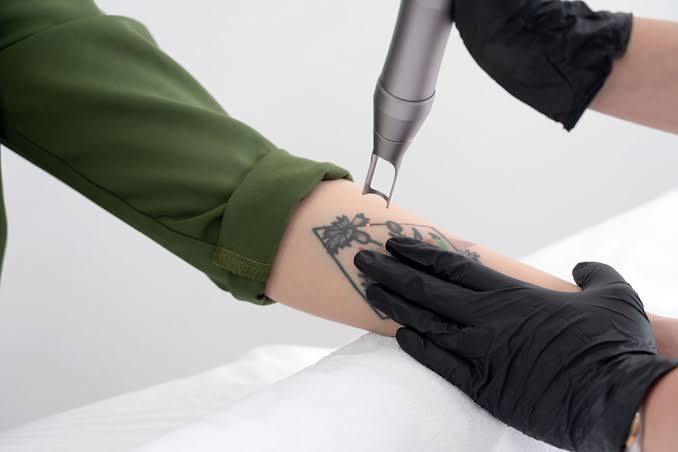
A single tattoo rarely disappears after one laser treatment. Most people need somewhere between six and twelve sessions, spaced weeks apart, before the ink fades to the point they’re satisfied. The exact number depends on a handful of factors that are worth understanding before starting the process, since they shape both the timeline and the budget involved.
Why There’s No Universal Number
Tattoo removal works by breaking down ink particles with focused light so the body’s immune system can clear them away. That clearing process takes time, and how much ink there is to clear varies wildly from one tattoo to the next. A small black outline on an ankle behaves nothing like a dense, multicolored sleeve, so quoting a flat number of sessions for “a tattoo” doesn’t hold up in practice.
Technicians typically give a range after examining the piece in person, because photos alone don’t reveal how deep the ink sits or how the skin has healed around it. That initial consultation is really the only reliable way to estimate a timeline.
Ink Color Changes Everything
Black and dark blue ink respond best to laser treatment because they absorb the widest range of light wavelengths. These colors often show noticeable fading within three or four sessions and may clear completely in six to eight.
Reds, oranges, and yellows require different wavelengths and tend to take longer, sometimes ten or more sessions. Greens and light blues are notoriously stubborn and can push a project toward the higher end of the range, occasionally beyond twelve sessions. Anyone with a multicolored tattoo should expect the removal timeline to be dictated by the hardest color to treat, not the easiest.
Depth and Density of the Ink Matter
Tattoos applied by an experienced artist with consistent needle depth tend to respond more predictably than amateur or homemade tattoos, which often have uneven ink placement. Professional tattoos frequently carry more ink overall, which can mean more sessions, but the even distribution sometimes makes the fading process smoother.
Cover-up tattoos present a particular challenge, since there are effectively two or three layers of ink stacked on top of each other. These cases can require fifteen or more sessions, and patience becomes essential since progress may seem slow for the first several treatments before it becomes visible.
Skin Tone and Location on the Body
Laser removal targets ink, but the surrounding skin absorbs some energy too, and darker skin tones require more conservative settings to avoid pigment changes. This often means slightly more sessions spaced further apart to protect the skin while still making steady progress.
Location matters as well. Tattoos on areas with good blood circulation, like the chest, back, and upper arms, tend to clear faster because the lymphatic system can carry away broken-down ink more efficiently. Tattoos on the hands, feet, and ankles, where circulation is comparatively poor, often need extra sessions.
Spacing Between Sessions
Sessions are usually scheduled six to eight weeks apart, giving the body time to process the fragmented ink and allowing the skin to fully heal. Rushing this timeline by scheduling sessions too close together increases the risk of scarring and doesn’t actually speed up the overall result. Patience with the spacing is just as important as patience with the total number of sessions.
Some clinics extend the gap to ten or twelve weeks for larger tattoos or for clients with slower healing patterns. A qualified provider will adjust this schedule based on how the skin responds after each visit rather than sticking to a rigid calendar.
What a Typical Timeline Looks Like
For a small, simple black tattoo, expect visible fading after two or three sessions and a mostly clear result by session six or seven. For a medium-sized tattoo with some color, six to ten sessions is a reasonable expectation, spread across roughly a year to eighteen months once spacing is factored in.
Larger, denser, or multicolored tattoos can take fifteen to twenty sessions and stretch over two years or more. This sounds like a long commitment, but the gradual pace is what keeps the skin safe throughout the process. Providers who specialize in this work, including the Mermaid Waters laser tattoo removal experts, generally walk clients through a realistic session estimate at the first appointment so there are no surprises later in the process.
Setting Realistic Expectations
Complete removal isn’t guaranteed in every case. Some tattoos fade to a faint shadow rather than disappearing entirely, particularly if they’re old, heavily layered, or done with ink that resists breakdown. A good technician will be upfront about this possibility rather than promising a perfect result.
The most useful thing to do before starting is ask for an honest, in-person assessment rather than relying on generic averages found online. Bring photos of the tattoo in different lighting if a first visit isn’t possible yet, and ask specifically about the colors present, since that single factor often predicts the timeline more than anything else. Going in with realistic expectations about session count makes the entire process easier to commit to and follow through on.