

A yard that feels organized and welcoming during the day can become surprisingly difficult to understand after sunset. Walkways disappear into shadow, driveway edges become less obvious, and planting areas that normally give the property depth can blend into one dark background.
Landscape lighting can solve these problems, but the goal should not be to make every part of the property equally bright. A better plan uses different types of fixtures for different jobs, giving important routes enough visibility while using softer accent lighting to reveal selected plants and architectural features.
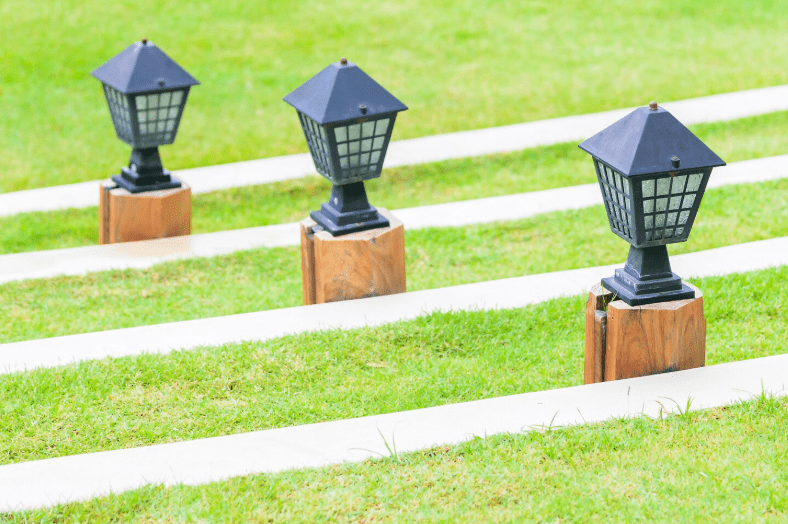
Bollard lights can be especially useful within this kind of system because their vertical form helps define paths, driveways, and boundaries while providing controlled illumination closer to the ground.
A balanced landscape lighting plan can combine bollard lights for movement with softer accent lighting for plants and architectural features.
Begin With Movement Through the Property
Before deciding which trees or walls to highlight, identify the routes people regularly use after dark.
This may include the walk from the driveway to the front door, a side path leading to the backyard, steps between different levels, or a route connecting a patio with a garden structure.
Walk these areas after sunset and note where the ground becomes difficult to see. Corners, intersections, steps, gates, and changes in paving usually deserve more attention than long straight sections.
Starting with movement helps make the lighting functional before decorative effects are added.
Think of Landscape Lighting as a System
One fixture type rarely works equally well everywhere.
Path lights can provide low-level guidance. Bollards can add stronger vertical definition along wider paths and driveways. Spotlights can highlight trees, walls, and architectural features, while in-ground lights can create discreet upward illumination.
Homeowners comparing different types of Landscape Lighting should therefore think about the property as a series of zones rather than selecting one attractive fixture and repeating it throughout the entire yard.
Different fixtures can still feel coordinated when they share similar finishes, proportions, or light colors.
Use Bollard Lights to Define Important Routes
Bollards are particularly useful where a path or driveway needs a more visible lighting structure.
Their taller form makes them easier to notice from a distance than very low path fixtures. This can help identify the edge of a driveway, guide visitors through a larger garden, or create a clear route between different outdoor areas.
They can also contribute to the daytime appearance of the landscape. A simple row of architectural bollards can reinforce the geometry of paving or connect the entrance visually with a patio or garden beyond.
When browsing Bollard Lights, consider height, light direction, finish, spacing, and the scale of the surrounding architecture rather than looking at the fixture in isolation.
Avoid Installing Bollards Like a Runway
Regular spacing can look appropriate in a very formal landscape, but placing identical fixtures directly opposite one another along every path can easily become too rigid.
In more relaxed residential gardens, staggered placement may feel more natural. Put lights near curves, entrances, changes in direction, or important planting areas instead of treating every few feet of paving the same way.
The pools of light should provide enough overlap for people to understand the route while allowing some darker areas to remain.
This reduces visual clutter and can also reduce the total number of fixtures required.
Match Bollard Height to the Space
Fixture height influences both the appearance of a bollard and the area it illuminates.
Shorter designs tend to blend more quietly into smaller gardens and intimate pathways. Taller bollards create a stronger architectural presence and may suit larger homes, broad driveways, or long paths where very small fixtures would appear insignificant.
Think about nearby features such as shrubs, retaining walls, gates, and outdoor furniture. A fixture should remain visible without overwhelming its surroundings.
Plant growth matters as well. A bollard that stands comfortably above new landscaping may become hidden once shrubs mature.
Use Accent Lighting to Add Depth Beyond the Path
A well-lit walkway surrounded by complete darkness can still make the yard feel flat.
Adding one or two softly illuminated features farther into the landscape creates depth. This might be a mature tree, textured stone wall, garden sculpture, or architectural column.
The accent does not need to be extremely bright. It simply gives the eye another visual destination beyond the path.
This technique works particularly well when the garden is visible from a patio or through large windows. Instead of looking into darkness, homeowners can continue seeing parts of the landscape from inside the house.
Control Glare Along Walking Routes
Outdoor lighting should make movement easier, not create bright points that are uncomfortable to look toward.
Fixtures that direct illumination downward or shield the light source can often provide better visibility than an exposed lamp with higher output.
This is important with bollards because the fixtures may sit relatively close to eye level for children or seated guests. Check how each light looks when approaching it from both directions.
If the source feels too bright, adjusting the fixture position, spacing, or light output may be more effective than adding additional illumination elsewhere.
Use Warm Light for Residential Landscapes
Color temperature influences how landscaping and building materials appear after dark.
Warm light often works well with timber, brick, natural stone, green plants, and residential architecture because it creates a softer evening atmosphere.
Whatever color temperature you choose, consistency within the same view is important. A pathway illuminated with warm bollards may look disconnected if nearby tree lighting appears noticeably blue or cool.
When adding new fixtures to an existing property, compare them with porch lights and exterior wall lights before finalizing the selection.
Plan Around Irrigation and Maintenance
Landscape fixtures share space with lawn equipment, sprinklers, plants, soil, and changing weather.
Before installation, check irrigation patterns and avoid positions where fixtures or electrical components will receive unnecessary direct spray. Bollards should also be placed where lawn equipment can move around them without frequent accidental impact.
Leave enough access for cleaning, inspection, and future adjustment.
Outdoor fixtures naturally collect dust, pollen, soil residue, and insects. A lighting plan that cannot be maintained easily may look good when first installed but perform less effectively over time.
Choose Fixtures Suitable for Outdoor Exposure
Exterior lighting may face rain, humidity, heat, cold, ultraviolet exposure, and prolonged contact with outdoor conditions.
Always confirm that a fixture is intended for its installation environment and review the manufacturer’s specifications for weather protection, electrical requirements, and mounting.
An exposed bollard beside a driveway may face different conditions from a fixture installed beneath a covered structure.
Professional electrical installation may also be appropriate depending on the voltage, cable routing, local requirements, and complexity of the project.
Use Controls to Avoid Lighting Empty Areas All Night
Different outdoor zones do not always need to operate on the same schedule.
Entrance lighting may remain on through the evening, while decorative landscape accents can turn off later. Motion detection may suit secondary paths or service areas, and timers can manage frequently used routes automatically.
Separate zones make the system more flexible because homeowners do not have to illuminate the entire yard simply to use one section.
Review the Finished Design at Night
Outdoor lighting should always be evaluated after sunset.
Walk each route in both directions. Check whether steps are visible, whether fixtures create glare, and whether any important sections remain unexpectedly dark.
Then look at the property from the street and from inside the house. This can reveal excessive brightness or light entering windows that may not be obvious while standing beside the fixtures.
Small changes in spacing or angle can often improve the design without adding another light.
Final Thoughts
A successful landscape lighting plan combines practical movement with visual depth.
Start by identifying the paths, driveways, steps, and entrances that need dependable illumination. Use bollard lights where a stronger vertical marker helps define those routes, then add a small number of landscape accents to bring trees, walls, and planting back into view.
Most importantly, allow darkness to remain part of the design. The goal is not to illuminate every square foot of the yard, but to make important areas clear while creating enough contrast for the landscape to feel natural and inviting after sunset.